
 cz
Thermomechanical Fatigue as a Methodology for High-Temperature Materials Design
 Dr.-Ing. Stefan Guth - Karlsruhe Institute of Technology, Germany
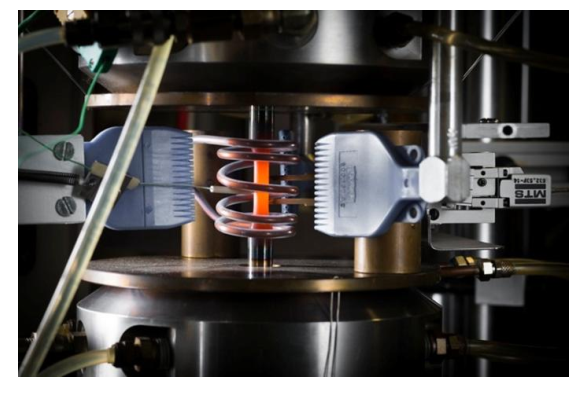
Thermomechanical fatigue (TMF) arises in high-temperature components as a result of temperature gradients and constrained thermal strains during start-up, load-change and shut-down operations. It is often the dominant life-limiting damage factor in critical engineering components. Consequently, laboratory TMF testing has traditionally been used to assess material performance and predict service life. It is well established that conventional isothermal fatigue, tensile, or creep tests cannot fully reproduce the damage mechanisms occurring under TMF, primarily because they do not account for transient thermal loading.
Despite these limitations, the development of high-temperature materials still relies predominantly on isothermal testing methods because of their lower experimental complexity. This seminar proposes a different perspective by introducing laboratory TMF testing as a methodology for high temperature materials design. Rather than merely qualifying existing materials, TMF testing is used to identify microstructures that maximise service life under realistic operating conditions.
The proposed method comprises the selection of representative TMF loading conditions, systematic investigation of deformation behaviour, microstructural evolution, and damage mechanisms, followed by targeted optimisation of the microstructure through, for example, tailored heat treatments or advanced manufacturing methods. The results demonstrate that the optimum microstructure strongly depends on the applied TMF loading conditions, highlighting the importance of designing materials under near-service testing. Furthermore, the initial microstructure may play a less significant role than commonly assumed, as substantial microstructural evolution may occur during service. These findings suggest a new paradigm for high-temperature materials design, in which microstructures are engineered not only for their initial state but also for their ability to evolve in a favourable manner throughout service, thereby maximising component life.