
 en
en
The Use of Hollow Specimen Technique for Evaluating Hydrogen Influence in Metallic Materials
 Dr.-Ing. Sergio Blasón
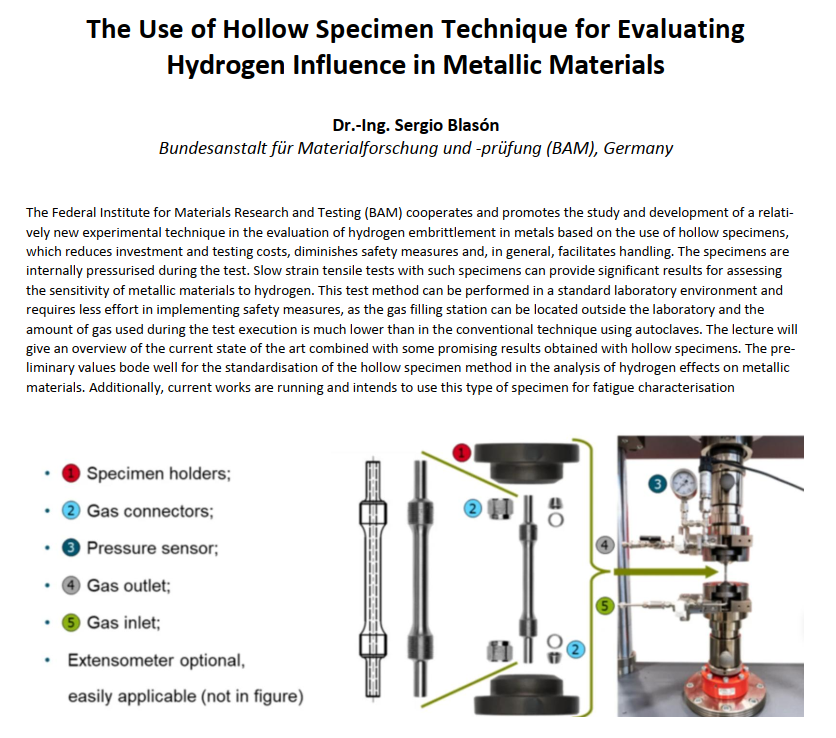
The Federal Institute for Materials Research and Testing (BAM) cooperates and promotes the study and development of a relatively new experimental technique in the evaluation of hydrogen embrittlement in metals based on the use of hollow specimens, which reduces investment and testing costs, diminishes safety measures and, in general, facilitates handling. The specimens are internally pressurised during the test. Slow strain tensile tests with such specimens can provide significant results for assessing the sensitivity of metallic materials to hydrogen. This test method can be performed in a standard laboratory environment and requires less effort in implementing safety measures, as the gas filling station can be located outside the laboratory and the amount of gas used during the test execution is much lower than in the conventional technique using autoclaves. The lecture will give an overview of the current state of the art combined with some promising results obtained with hollow specimens. The preliminary values bode well for the standardisation of the hollow specimen method in the analysis of hydrogen effects on metallic materials. Additionally, current works are running and intends to use this type of specimen for fatigue characterisation
Seminar (in english):
Dr.-Ing. Sergio Blasón | Bundesanstalt für Materialforschung und -prüfung (BAM), Germany
The Use of Hollow Specimen Technique for Evaluating Hydrogen Influence in Metallic Materials
This lecture is organized as part of the project “Materials and technologies for sustainable development (MATUR)”, Reg. No. CZ.02.01.01/00/22_008/0004631, co-financed by the European Union.